

Prepared by Dr. Lynn W. Phillips, former award-winning faculty at Stanford Graduate School of Business and on-staff expert in Client Experience Engineering, Berkeley Research Group (BRG).
On a recent evening, well past 8 p.m. I waited in the wings of a law office in Newport Beach, California, to speak to the CEO of one of the nation’s leading mediation firms for settling complex, high-stakes legal disputes. A lawyer others have lauded as the nation’s finest mediator, he has successfully settled several billion dollars in cases every year for almost two decades. According to one court document on a high profile crisis dispute, he has “mediated some of the most significant disputes in recent history.” 1
A shortlist of lawsuits settled by him and his team spans diverse matters involving well-known tech firms (Apple, Boeing, Google, Intel, Oracle, Meta, Nvidia, Twitter); banks (Citibank, JP Morgan Chase, Deutsche Bank, Wells Fargo, UBS); chemical makers (3M, BASF, DuPont, Tyco); insurers (AIG, AXA, Anthem, Chubb, HCC, State Farm); Big Pharma (Celgene, Merck, Pfizer, Purdue); sports franchises (NBA, NFL, UFC) and educational institutions (Harvard, Johns Hopkins, Michigan State, NYU, USC).
Not surprisingly, he’s one of those sought-after experts for whom it is extremely hard to get time on his calendar as his schedule for conducting mediations is often booked months in advance. This despite a fee structure commanding some of the highest billing rates in this industry—albeit one that is understandable given the end-result benefits that attorneys and their clients can reap from avoiding the ever escalating delays, costs, risks, and uncertainties of resolving disputes through mediation vs. traditional litigation.
This calendaring challenge applies even to me, despite having known him for a long time covering 6+ decades of our adult lives. He is my identical twin brother, the Hon. Layn R. Phillips, former U.S. Attorney and former U.S. District Judge appointed by Ronald Reagan, and the founder of Phillips Alternative Dispute Resolution Enterprises, or PADRE. PADRE was founded by Layn in 2014 after a two decade career at law firm Irell & Manella and a several year stint on the federal bench.
Purpose of this Post: I Study Customer Experience Leaders and PADRE is a Classic Example.
As a former business school professor at Stanford, Harvard, Northwestern and UC Berkeley—and now as an author and consultant—my research focuses on enterprises that exemplify best and emerging “next” practices in a management discipline that I helped to establish while at Stanford—the discipline of Customer Experience Engineering. This field strives to address an enduring question: Why and how do enterprises create and sustain competitive advantages that generate supranormal rates of return?
Per a recent LinkedIn Post, Customer Experience Engineering is the discipline of choosing and delivering superior profitable customer value propositions to targeted customer communities and ecosystem partners. There is a wealth of evidence that customer experience leaders far outperform their industry peers and a plethora of case studies of 21st century rivalry that show how players who weaponized these skillsets have overturned markets and incumbents to create the world’s most valuable firms. 2
Exemplars demonstrating this point are legion, global and cross-sector. Anyone familiar with Apple’s remarkable transformational journey to become one of the world’s most valuable enterprises, or the countless examples of other famed disruptors who overturned markets, can easily describe—often from personal experience—the unique proposition delivered by these players and the unprecedented levels of “brand love, customer delight, and brand coolness” it created that drove their huge success.
 Customers sleeping outside Apple Stores queuing to buy its new products can wax eloquently about Apple’s surprisingly easy-to-use journey promise, how it enables them to easily access solutions that productively enhance their personal and professional lives. This promise spans all Apple products, services, delivery platforms and experiential forums. It was historically brilliantly portrayed in its “I’m a Mac/I’m a PC” ads that showcased what Apple’s journey was about and why it mattered to its customers.
It was this strategic architecture that enabled Apple to transcend desktop computing and apply it to other devices like smartphones, pads, watches, etc., building out an entire ecosystem that echoed and reflected it, and taking the company to Infinity and Beyond! Apple devastated what were at the time more powerful, better-resourced rivals and crushed the growth prospects of other high-profile players, a transformation still ongoing as it adds new elements of value to its architecture such as data privacy.
Yet, in the pantheon of 21st century customer experience leaders, few of the popular and widely cited exemplars of excellence such as Apple and others come from the legal services industry. To be sure, there are countless examples of sector companies investing in new business models or seeking to capitalize on rapidly advancing digital technologies that helped to drive innovation in so many other sectors. And many of these firms offer convincing testimonials of the client experiences that they deliver.
Industry commentators now extol why a focus on client experience and centricity is becoming essential within legal services, citing growing client demand for transparency, efficiency, and personalization. The U.S. market, accounting for nearly 40% of the global $1 trillion industry, is a hotbed where startups and incumbents are investing in legal tech to enhance efficiency and improve experiences. Those leveraging AI, predictive analytics, and tailored service models, such as Clio and Harvey, are gaining advantage. 3
But many of these are emerging players operating in new-game competitive landscapes where the value creation model is morphing, being shaped by fast-changing rules. Success is far from ensured. In the ADR space in particular, there are few examples of firms with a track record and reputation that have attained legendary Apple-like status in delivering a unique branded client experience where client prospects ask, “What line do I have to stand in and how much do I have to pay to get that experience?”
In my role as an on-staff expert in Customer Experience Engineering at Berkeley Research Group or BRG—a top 50 consultancy providing services to a community that includes some of the world’s largest, most prestigious law firms and their clients, founded by my former Stanford and UC Berkeley colleague, Dr. David Teece—I’ve looked for exemplars within legal services of firms that hew to the best practices and disciplines of choosing and delivering winning customer value propositions that I’ve long espoused.
To be sure, there are many legendary law firms that fill this bill, but few in ADR. This post presents one exemplar, PADRE. But another reason I wanted to post on this topic is that my research revealed that many ADR firms confront the same formidable challenges and fall into the same traps as do many other companies that I’ve advised over time. First, they face diverse client communities with stakeholders at multiple levels with different needs that can be influential in appointing neutrals to resolve their disputes.
In complex, high-stakes disputes, these stakeholder communities can include state and federal judges, who often appoint mediators and special masters; plaintiff and defense law firms and their counsel; Boards, the C-suite, General Counsels and their teams in corporations and within insurance carriers and their various towers which protect companies from liabilities; federal agencies involved in litigation; even international bodies that appoint neutrals like those in London, Singapore and Stockholm, etc.
Confronted with complex client communities of diverse stakeholders, the messaging by many ADR firms to them—like that of many great scientific and engineering companies—falls into the category of being mainly about touting the capabilities of the firm or its expert staff. In the case of ADR firms, they go on at length about who they are and what they’ve done. But what experience clients can expect by hiring their firm or its neutrals and why they should pick them vs. others is either vague or often goes unaddressed.
Far less attention is devoted to what experiences will happen in stakeholders’ lives by doing business with their firm and its neutrals vs. rival alternatives; the outcomes their enterprise will achieve; or what will happen in the lives of downstream constituencies that they serve by partnering with them vs. rivals. Many are vague as to what’s different about the journey they will take clients on to attain their end-state goals vs. competitors; how much they must pay to get this experience vs. rivals; or why it’s good value.
The consequence of this prevailing dominant logic in messaging is that many ADR firms provide more value than they communicate to their targeted stakeholders and capture for their investors. Since the experience stakeholders can expect to get is often unclear, much less why it is superior to alternatives, stakeholders must deduce this on their own, choosing the firm and neutrals they perceive makes them better off, relying upon inferences that go unchallenged or reverting to those firms they’ve always used.
Organization of this 3-Part Post and the Sources Relied Upon in Preparing its Insights.
In Part 1, the next post in this series, I outline what I call the customer experience architecture of the nation’s leading ADR firm in resolving complex, high-stakes legal disputes, PADRE—both the Client Value Proposition that it offers to targeted client stakeholders and its designed Value Delivery System. The latter describes 12 distinctive elements of how PADRE delivers its value proposition to clients and the unique journey it takes them on to reap its vast rewards of settling their disputes through mediation.
In Part 2 of this article, I provide examples of the individual Client Value Propositions offered up by select mediators on PADRE’s panel of distinguished neutrals. After all, each panel member possesses unique expertise and background spanning different practice areas that in turn leads to a distinct experience each can offer potential clients, one that must stand out among dozens of alternatives. One PADRE mediator, Bill Ohlemeyer, with an impressive 40-year career journey, captured this challenge:
“I need a 3-sentence value proposition that breaks through that logjam and helps clients think, ‘Hiring Bill makes sense because,’ as opposed to, ‘If I can infer this from Bill’s background, then I can conclude…’, which may be an incorrect inference. It is critical to have a value proposition that answers the question, why pick me? Who I am, what I’ve done is easy. Why choose me is hardest. Any proposition for a mediator must answer: How are they to work with, what experience will they deliver, why pick them?”
Bill is one of some 30 members of PADRE’s distinguished panel of neutrals and he brings a unique set of all-star credentials to the firm. He joined following a career representing plaintiffs, defendants, and leading a Fortune 5 corporate law department handling a wide range of commercial disputes, mass torts, product liability, class actions, and federal multidistrict litigation. Other PADRE neutrals who I also interviewed include:
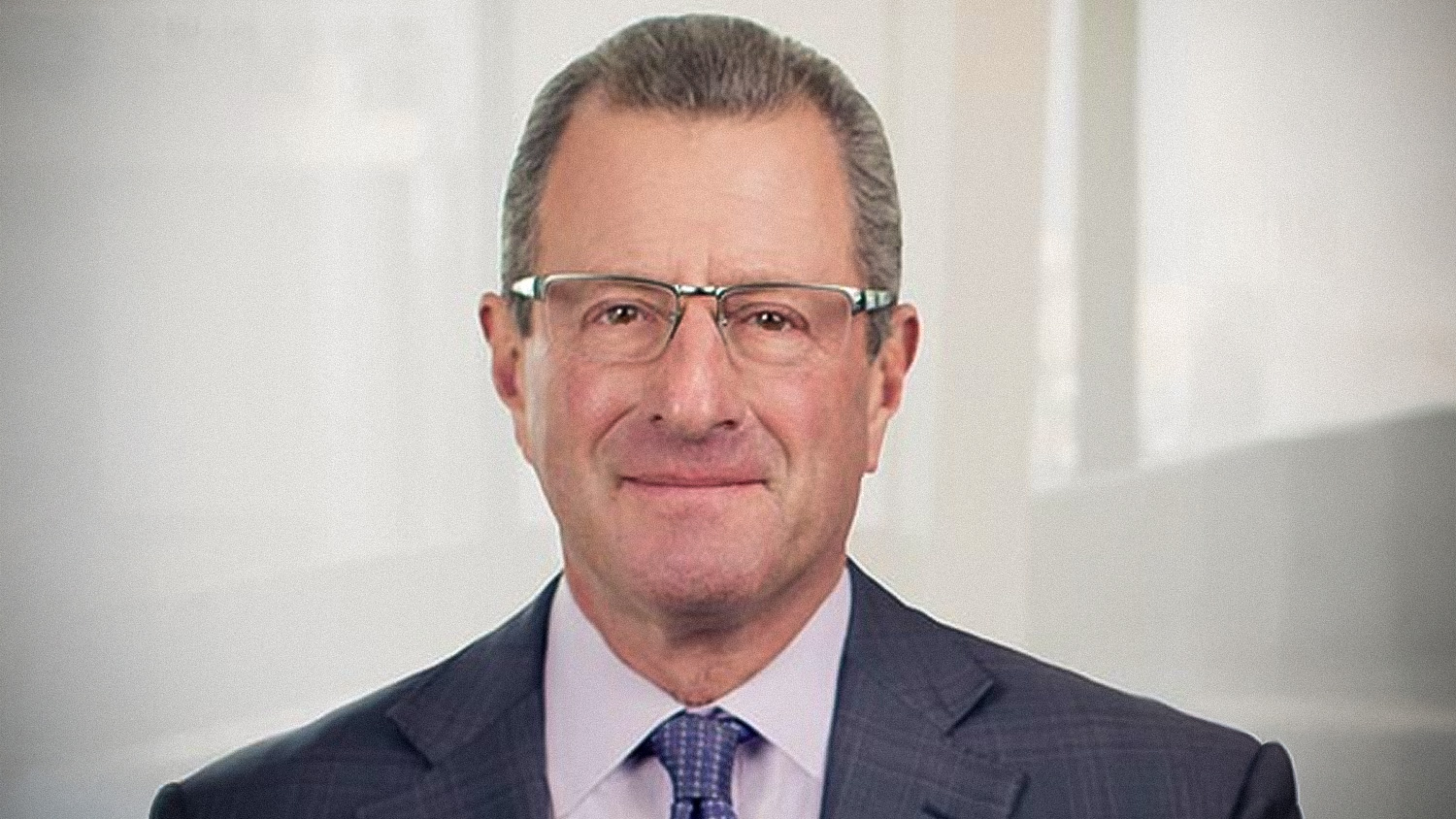 Seth Aronson, who joined PADRE in 2023 after 40+ years as a trial and appellate defense counsel, and was consistently ranked by many publications as one of the best attorneys in securities litigation, having actually “written the book” on best practices in defending corporate clients in these kinds of disputes.
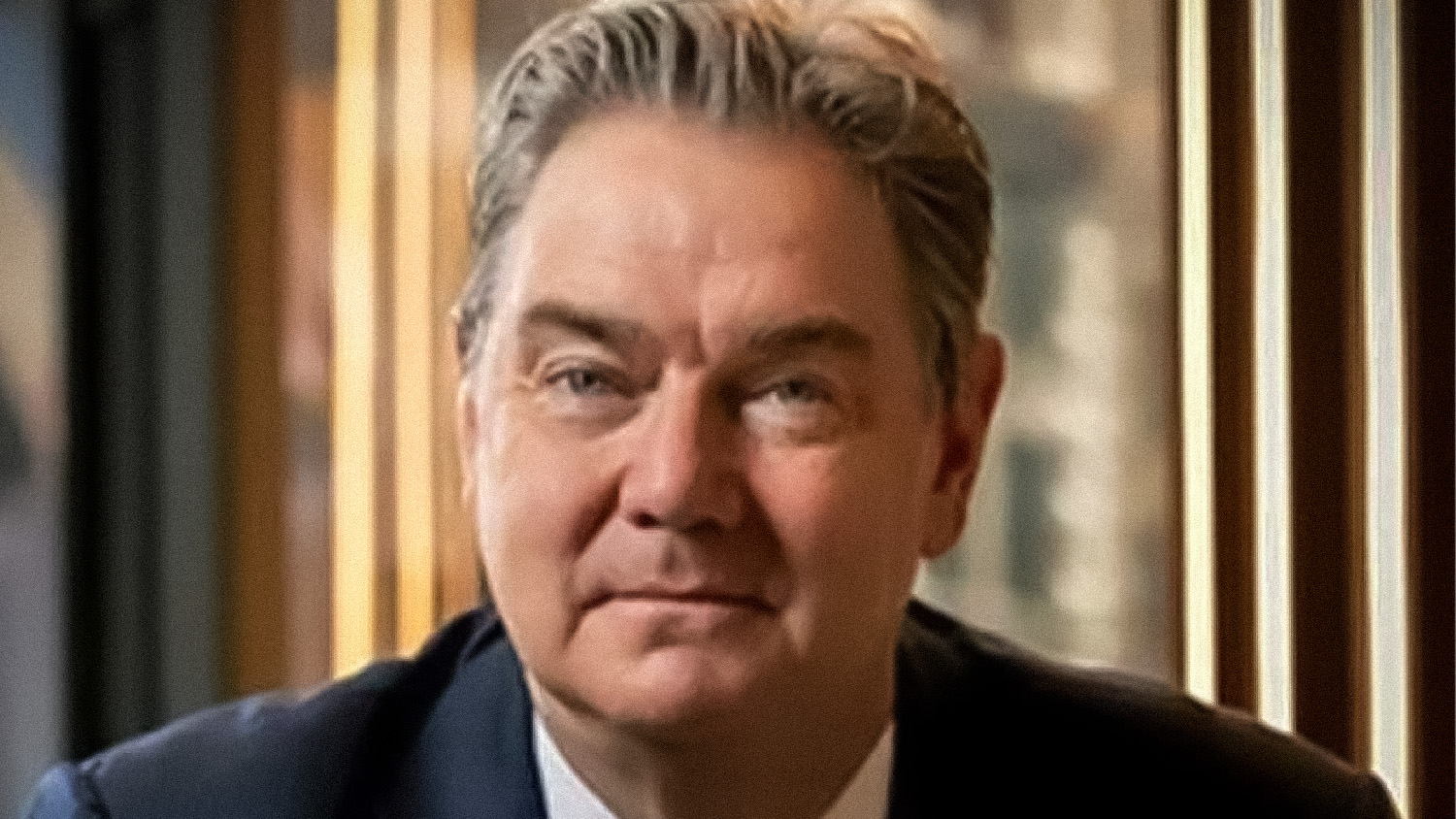 Sean Coffey, who just recently stepped down as 24th General Counsel of the U.S. Navy after a career as a renowned trial lawyer with a record of notable successes as a federal prosecutor and as a plaintiff and defense lawyer in major law firms spanning diverse complex legal matters—and who also co-founded a litigation finance firm.
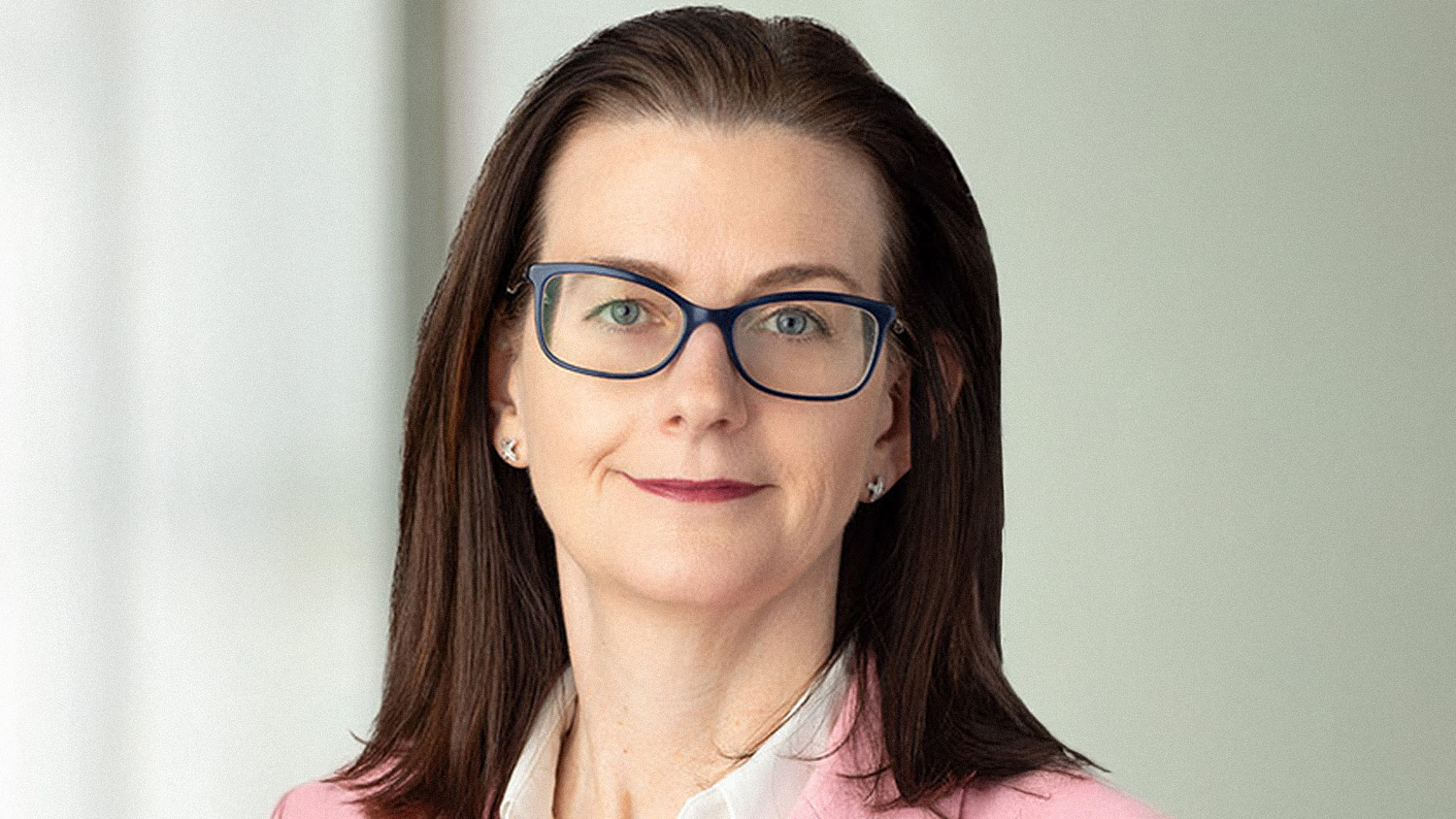 Ann Cook, former Vice Chair and General Counsel for Ernst & Young’s (EY) U.S. member firm and others in the Americas region, responsible for all EY civil litigation and regulatory dockets and advised EY on complex public disclosure issues, client bankruptcy filings, and a host of other corporate matters.
 Niki Mendoza, who has co-mediated hundreds of cases with Layn in her over 6 years at PADRE as well as hundreds on her own, leveraging her unique background as a litigator and settlement counsel in a major law firm and as a senior executive in a claims administration firm for class actions and mass torts.
We’ll highlight others in Part 2. In writing this series, I disclose that I’m not a shareholder in PADRE, though I’ve completed consulting projects on its behalf. The insights are based on my review of public sources that comment on the firm’s reputation, including past interviews with Layn, PADRE’s former clients, and my talks with past clients like those noted above and others regarding what they had to say about the unique client experience delivered by PADRE. Layn reviewed and approved all content. 4
I hope you enjoyed this introduction to my posts on PADRE and you’re motivated to read Parts 1 & 2 which will follow in the coming weeks.
Dr. Lynn W. Phillips • Client Experience Engineering Expert at the Berkeley Research Group (BRG)
1 Flint Water Cases, Motion to Appoint Interim Subclass Settlement Counsel (Filed 08/15/19) https://tinyurl.com/flint-subclass-counsel
2 For a review of this research, see the studies cited in Chapters 1 and 8 of my recent book with Drs. Stanton Sloane and Mel Hughes: Customer Experience (CX) Engineering in Aerospace & Defense: Delivering Winning Value Propositions in a New-Game Landscape.
3 See, for example, the full list of sources reviewed for this post in my LinkedIn profile, Featured section, especially the following: Russell, M. (May 2025). In a Chilly Funding Market, a VC Explains Why Legal Tech Is ‘As Hot as You Can Humanly Imagine. Business Insider. https://tinyurl.com/bi-in-a-chilly-market • Russell, M. (May 2025). What Harvey is doing to win the legal AI race it inadvertently started. Business Insider. https://tinyurl.com/bi-harvey-legal • Matich, T (May 2025). What Does it Mean to Run a Client Centered Law Firm? Clio (Legal Dictionary & Blog). https://www.clio.com/blog/client-centered-law-firm/ • Petry, J., Gassmann, T. (July 2025). Artificial intelligence in dispute resolution. Reuters https://tinyurl.com/mrx67zf2
4 See, for example, interviews with Seth Aronson https://tinyurl.com/aronson-interview-post; Sean Coffey https://tinyurl.com/coffey-interview post; Niki Mendoza https://tinyurl.com/mendoza-interview-post and Bill Ohlemeyer https://tinyurl.com/ohlemeyer-interview-post.

You must be logged in to post a comment.