
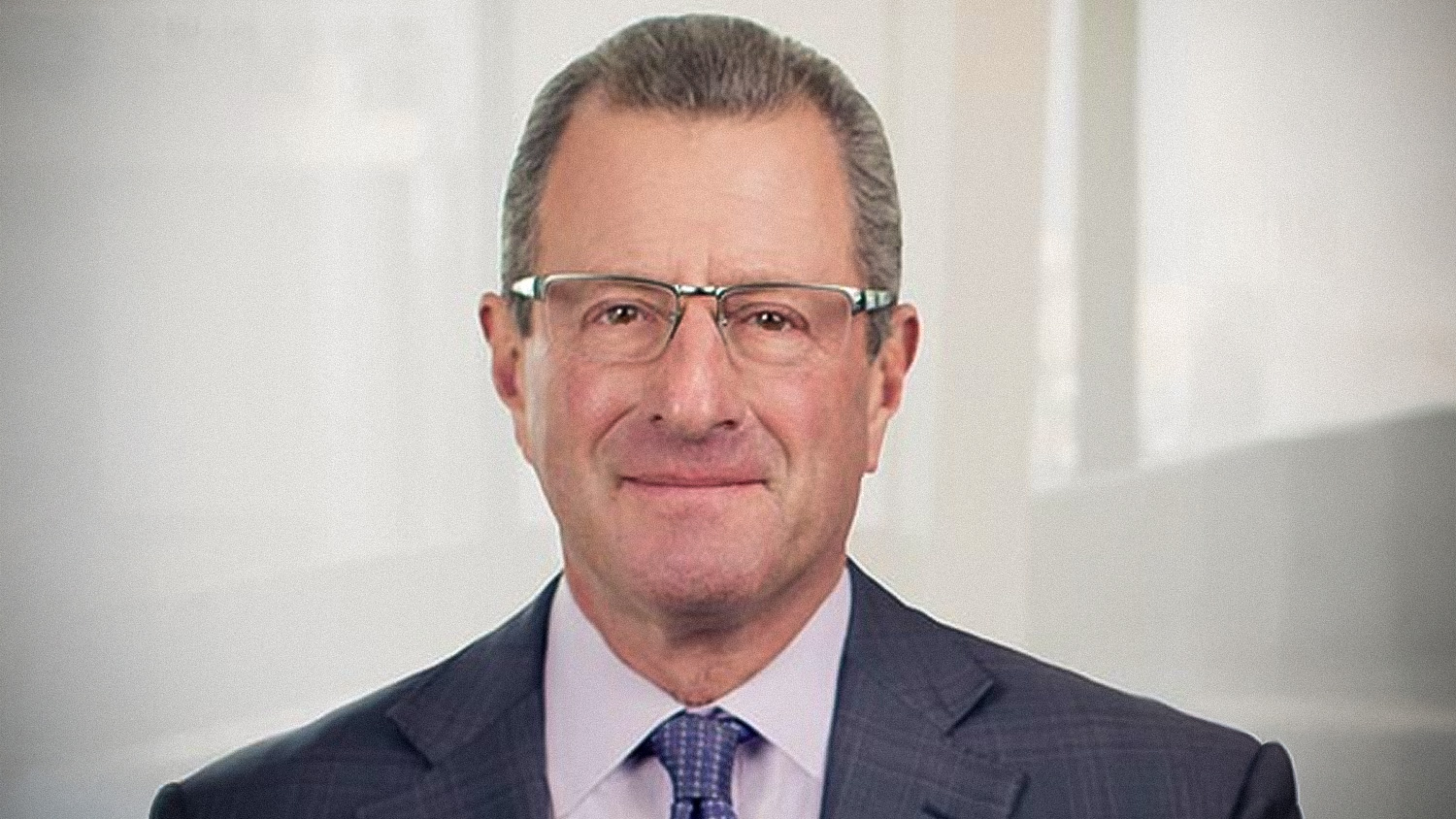
Interview with Seth Aronson, mediator and arbitrator in Phillips ADR’s distinguished panel of neutrals, conducted by Dr. Lynn W. Phillips, Client Experience Engineering expert, Berkeley Research Group.
Seth Aronson joined Phillips ADR’s panel of neutrals in 2023 after 40+ years as a trial and appellate lawyer. He was the Managing Partner of O’Melveny & Myers LLP Los Angeles office, and also served as firm-wide chair of its Securities Litigation practice. He has consistently been ranked one of the top securities and commercial litigation attorneys by Benchmark Litigation, Best Lawyers in America, Chambers USA, Daily Journal, Lawdragon, Who’s Who Legal, and named Los Angeles Lawyer of the Year three times. Seth argued and won a US Supreme Court victory in a landmark securities class action case, and as defense counsel, tried to verdict and won cases at state and federal courts. He forged strong relationships with and won the goodwill of the plaintiff’s bar and numerous judges in his roles as the President of the Board of the Association of Business Trial Lawyers, Chancery Club of Los Angeles, and Legal Aid Foundation of Los Angeles.
(LP): Let me start this interview with a quote from an article in The Daily Journal Extra published in 2005 in which your picture alone appeared on the front page. It said, and I quote: “Managing partner of O’Melveny & Meyers LA office, and chair of the firm’s securities class action practice, Seth Aronson is not the man you want to see walking into the courtroom if you are on the plaintiff’s side of a securities case. ‘My clients are never happy to see him arrive,’ says Darren Robbins, partner at Lerach, Coughlin, Stoia, who sits across the table from Aronson in the pending Fannie Mae shareholder derivative class action cases. He is not only one of the most experienced people in the field, but he is also very competent.” What a striking testimonial from opposing counsel! https://www.dailyjournal.com/article/292402-security-checkpoint
(SA): Yes, thank you Lynn. Darren is one of the go-to plaintiff lawyers. His quote was in a piece listing top securities lawyers where I was named one. Another of my favorite unsolicited testimonials came from a defense lawyer attending an early mediation I did with Layn Phillips, Phillips ADR’s founder and CEO. The lawyer was familiar with a case I argued and won at the Supreme Court on special limitations in class actions. He pulled me aside and thanked me, saying automakers and other companies still frequently use that case to defend themselves against follow-on class actions. So, I walked into that mediation with some goodwill.
(LP): So, how did you get started with Phillips ADR?
(SA): After Layn left Irell & Manella and founded Phillips ADR, we talked about working together. I joined as a new panel member in 2023, ‘shadowing’ Layn in mediations. It took me a while to find my voice as Layn’s ‘shadow’ as I was in listening and watching mode to learn his process. We’ve since co-mediated together many times.
(LP): What motivated you to become a mediator and arbitrator and join Phillips ADR?
(SA): Like most attorneys who transition from trial lawyer to mediator, I have participated in many mediations and arbitrations over the years. So, I know the dance, how the pieces move and have seen up close how mediators work. I’ve hired them for settlements that required Court approval and for disputes I was involved in as counsel in my main practice area of securities litigation and others.
My interest in becoming a mediator and arbitrator was spurred by my work with Layn. I was in one of Layn’s first mediations in the 1990’s when he was a lawyer at Irell & Manella. I had never heard of him before but I was very impressed with his mediation process, how effective it was, and the results that it produced. He brings a different skill set than other neutrals and a level of credibility that others don’t have, being a former federal judge along with his vast experience in mediating matters of all kinds. Whenever I proposed candidates for mediating a complex, high-value case, Layn was on the list.
I wanted to join Layn’s panel of neutrals because of Phillips ADR’s reputation and the kind of cases Layn mediates. He has worked on some of the world’s most high-profile, challenging mediations and through these experiences, forged a deep understanding of what it takes to settle them, with many of the guiding principles applying to other types of cases. I wanted to work in a mediation practice with that kind of profile and master Layn’s process, which has been proven to be spectacularly successful. I also knew several of Phillips ADR’s neutral panelists, having worked with them over the years.
(LP): I’m curious, what aspects of Layn’s mediation process transcend these severe test types of complex, hard fought, high-stakes disputes and do they apply to cases that don’t hew to that profile?
(SA): There have been many articles describing Layn’s process and achievements*, but several points jump out that are universally relevant, ones that you may have already heard about talking with other mediators on Layn’s panel. He is known for his ability to distill disputes down to a few vital issues and use these to focus parties on the strengths and weaknesses of their case before transitioning to settlement terms. Layn maintains a laser focus on things that matter and he isn’t distracted by nice-to-haves. As Fred Smith of FedEx once said: “The main thing is to keep the main thing the main thing.”
In mediations I’ve done with Layn, he has often observed that a flaw of some mediators is they talk more than they listen. That guidepost can be a source of breakthroughs. If you listen closely to what the parties are saying, you may detect troublesome miscommunications, pick up on their unrealistic expectations, or identify gaps in understanding that block efforts to reach resolution. You become trusted by the parties that you deeply grasp their positions and can represent them in negotiations.
Another generalizable capability that transcends complex, high-stakes cases is the unmatched level of preparation Layn and his team bring to a mediation, and their tenaciousness in following up on one that doesn’t end in settlement.** That is a competence I witnessed first-hand in hiring Layn as a mediator and a factor that attracted me to join Phillips ADR, as it mirrors my own approach.
(LP): In your view, what are other elements of the unique branded experience that prospective clients can expect to get by hiring a Phillips ADR mediator who follows the process that you’ve described?
(SA): Beyond getting a mediator steeped in the Phillips ADR mediation process as a result of being mentored by Layn and working closely with him in co-mediations, clients can expect to be able to hire a mediator who fits their time frame and budget. Other than those foundational client experiences, what clients can expect from hiring a Phillips ADR mediator depends on the client and the matter.
(LP): How so?
(SA): Every client and matter is unique. If the client is, say, a CEO in a corporation, and the dispute is a security class action case concerning stock sales by insider senior executives, they need a mediator who understands that process, the myriad pitfalls that can accompany these cases and can provide counsel that safeguards their role and corporate impact—even if they have been planning this for years by setting up 10b5-1 trading plans for selling stocks they own.
Just as every client and matter is unique, so too are the members of Phillips ADR’s panel of mediators and arbitrators. Each varies in terms of their practice areas, sector expertise, and the perspective and style they bring to a mediation based on their own career journey. In that sense, every panelist offers a unique value proposition to clients seeking to appoint a mediator or arbitrator to handle their dispute.
(LP): That’s a great segue. Talk about the unique value proposition you bring to Phillips ADR clients and how your career journey maps into the client experiences (CXs) that make up that proposition.
(SA): There are several elements of value I bring to mediations that parallel the CX Layn delivers and that I think Phillips ADR wants to come to stand for. The first relates to the fact I have extensive, hard-to-match sector and domain expertise and experience in my primary practice areas. These span securities class actions and shareholder derivative litigation—two different types of cases that often proceed in parallel tracks—and other major commercial litigation including bet-the-company disputes.
My real-life experience handling major litigation at a major firm for decades is unusual. I’ve tried big cases, an opportunity many big firm lawyers never get. This enables me to explain the complex legal issues inherent in these cases to all parties and navigate their unique corporate dynamics and pressures. It helps me anticipate problems likely to occur, the risks involved and prevent them from emerging if possible. I understand when to try cases and settle them. My experience can help compel parties to listen to my views in negotiations, and leverage them when making the case to settle a dispute to senior stakeholders who must grant final approval.
I’m not a judge like Layn, so I can’t say things like, “That wouldn’t go over well in my courtroom, Counselor.” But I can say, “Here is how I handled that situation in a securities case I tried years ago.” Having been through the process, knowing how clients think and approach these issues, and how judges and juries react to and rule on these issues is, I think, very beneficial to all mediation parties.
(LP): Another CX that is mentioned in your Phillips ADR bio is that throughout your career, you have been praised for designing creative settlements of complex cases. Can you comment on that please?
Over the years I’ve prided myself on trying to think outside-of-the-box on settlements. Anyone can write a check and in most cases, that is what happens in a settlement, someone is going to write a check and that will be the end of the matter. But there are other ways to get creative, and I have a track record doing that for clients.
(LP): What would you say are some of the key proof points from your background that support that?
One is from 2002 when Bill Lerach was still practicing and it concerned a challenged acquisition of my client Southwest Gas by ONEOK Corporation that took place in early 2000. Southwest Gas was sued by its shareholders, represented by Lerach, Coughlin, Stoia, Geller. There was another lawsuit by Southwest Gas against the Southern Union Co., which had made competing offers to buy Southwest.
The settlement we crafted with Bill Lerach and Darren Robbins called for payments by Southwest Gas’ insurers to the shareholder class, and we also assigned a portion of any recovery that Southwest Gas might get from Southern Union. Judge James Lorenz of the U.S. District Court for the Southern District of California complimented the settlement as novel and creative. It is a good example of out-of-the-box thinking when the future of a company was on the line.
Another proof point is derivative cases I’ve managed. They offer creativity opportunities for settlement because you can often propose corporate governance changes in lieu of money to settle the dispute.
(LP): Any other CXs you’d like to highlight clients can expect by hiring you as a mediator or arbitrator?
(SA): I think another CX that clients who hire me as a mediator or arbitrator can expect concerns my style, which I would describe as one that is more collaborative and partner-like than some others. For example, there are some defense lawyers who have managed to aggravate the insurance carriers by pushing them too hard to settle a case while also trying to wring more money out of them.
I think carriers appreciated my capability to go the distance and assessed their position accordingly, while valuing my collaborative, partner-like style. I’m reminded of one of Layn’s tradecraft gems here:
“Sometimes what is required is distinguishing between the ‘Secretaries of State’ and ‘Secretaries of War’ to lay the groundwork for the parties’ commitment to settlement by forging collaborative relationships.” ***
(LP): Are there other practice areas where you have domain expertise not obvious from your bio?
(SA): Yes, most cases I have worked alongside Layn have not been securities class action cases. One is consumer class actions and mass torts. I recently was hired for a consumer class case action by stakeholders in a mediation where I supported Layn. Another practice area is professional negligence. I have represented law firms and auditing firms in disputes where this was an issue.
I also have extensive experience representing foreign companies and individuals who were sued in the U.S. My first work was for directors and companies from England, Belgium, the Netherlands and Italy from the late 1990’s to the late 2000’s. The case work then shifted to Asia. I went to China early and established a presence there and was hired in the first major U.S. litigation of a Chinese company, one Layn settled for about $18 million. The CFO of that client invited me to speak to an organization of CFO’s of China-based companies listed in the U.S. or planning to list.
From there, my work in China took off and I was hired by different Chinese companies whose directors were sued in the U.S. The diplomatic side of managing negotiations on behalf of Asia-based clients was an important aspect of the client experience I delivered. Senior corporate stakeholders often attended these mediations, traveling from Asia to the U.S. to do so, underscoring the need for settling the dispute while they were present or risking the dispute going on for some time afterwards.****
(LP): What is the trend in this area given investor concerns over Beijing’s regulation of big business?
(SA): The huge wave of U.S. parties suing Chinese directors has subsided. Now it is a much lower but steady stream of lawsuits, given the interconnected global economy and trade with China. While recent U.S. share listings for Chinese or Hong Kong companies have been falling in recent years, the New York Stock Exchange expressed optimism about more Chinese companies carrying out IPOs on its exchange.
Other Asian companies are now seeking a more established presence on U.S. exchanges, especially those from India, Japan, Malaysia, Singapore and South Korea. Recently European corporations are listing on U.S. exchanges at the fastest rate in decades and African and South American companies are starting to explore listings here. The fact that I have had in-depth experience representing foreign companies and their senior executives in the U.S. puts me in a good position to help these clients relate to how our system operates and support them in the event that any disputes should arise.
(LP): Seth, as you know, all value propositions have tradeoffs. Your career journey is one of stellar accomplishments and countless accolades as a member of the defendant’s bar. Are those perceived tradeoffs clients that plaintiff counsel might have in hiring you, and if so, how do you overcome them?
While my career journey as a trial and appellate lawyer was one spent mainly as defense counsel, over the years I have interacted with and developed a reservoir of goodwill with the plaintiff’s bar as a result of my participation in various professional associations and forums. For example, I was President of the Board of the Association of Business Trial Lawyers, President of the Legal Aid Foundation of Los Angeles, a legal services provider that protects the rights of the vulnerable underserved community within the Greater Los Angeles area, and, more recently, as President of the Chancery Club of Los Angeles.
These roles helped me develop relationships with many plaintiff lawyers which broadened my perspective as a potential mediator, and helped me connect with state and federal judges. I think that I know almost all of the Central District judges in California, many on a first-name basis, and some for many years. So, I can talk with plaintiff’s lawyers about what the defense is thinking and with defense lawyers about the plaintiff’s game plan and I can advise both sides on how a judge is likely to rule on a matter. I’ve already been contacted by members of the plaintiff’s bar to work with them on matters.
(LP): Outstanding interview, Seth. Thank you for your time.
More on Seth Aronson: https://phillipsadr.com/our-team/seth-aronson/
More on Lynn Phillips: https://www.thinkbrg.com/people/lynn-phillips/
* See: Meet the Ex-Judge Mediating J&J’s Talc Concealment Suit, Law 360 Pulse, February 26, 2024
https://www.law360.com/pulse/articles/1806230/meet-the-ex-judge-mediating-j-j-s-talc-concealment-suit
** For more on the Phillips ADR mediation process, see the interview with Hon. Layn R. Phillips (Ret.), from ADR Times, October 10, 2022, https://www.adrtimes.com/whos-who-in-adr-hon-layn-r-phillips/
*** Ibid.
**** To see a list of representative mediations that Seth has worked on at Phillips ADR, see his LinkedIn profile under Projects. https://www.linkedin.com/in/setharonson1/